Between 1868 and 1975, Wolverhampton was the undisputed centre of British bicycle manufacturing. More than 200 bicycle manufacturing companies operated in the city during this 107-year period, making it one of the most prolific cycling hubs in the world. Today, none remain.
The Birth of an Industry
Wolverhampton's bicycle industry emerged in 1868, during the height of the Victorian cycling craze. The city's existing metalworking expertise, developed through lock-making and ironmongery, provided the perfect foundation for bicycle manufacture. Local craftsmen adapted their skills to produce the frames, gears, and components that would carry cyclists across Britain and beyond.
Sunbeam: The Gentleman's Machine
John Marston founded what would become Wolverhampton's most celebrated bicycle marque in 1887. His wife Ellen suggested the name "Sunbeam," and the factory on Pool Street became known throughout the city as "Sunbeamland." Marston, born in 1836 and trained as a japanner, brought an uncompromising attention to detail to bicycle manufacture.
Sunbeam bicycles earned a reputation for exceptional quality. The company's oil-bath chain case, adopted in the mid-1890s from an invention by Harrison Carter, was unique in the industry. The enclosed system lubricated the bottom bracket, chain, and rear hub simultaneously, keeping the mechanism clean and extending its life far beyond rival designs. The "Golden" model featured alloy wheel-rims, epicyclic two- or three-speed gears, and real gold-leaf pin-striping. The "Royal" offered equivalent quality with distinctive red lining.
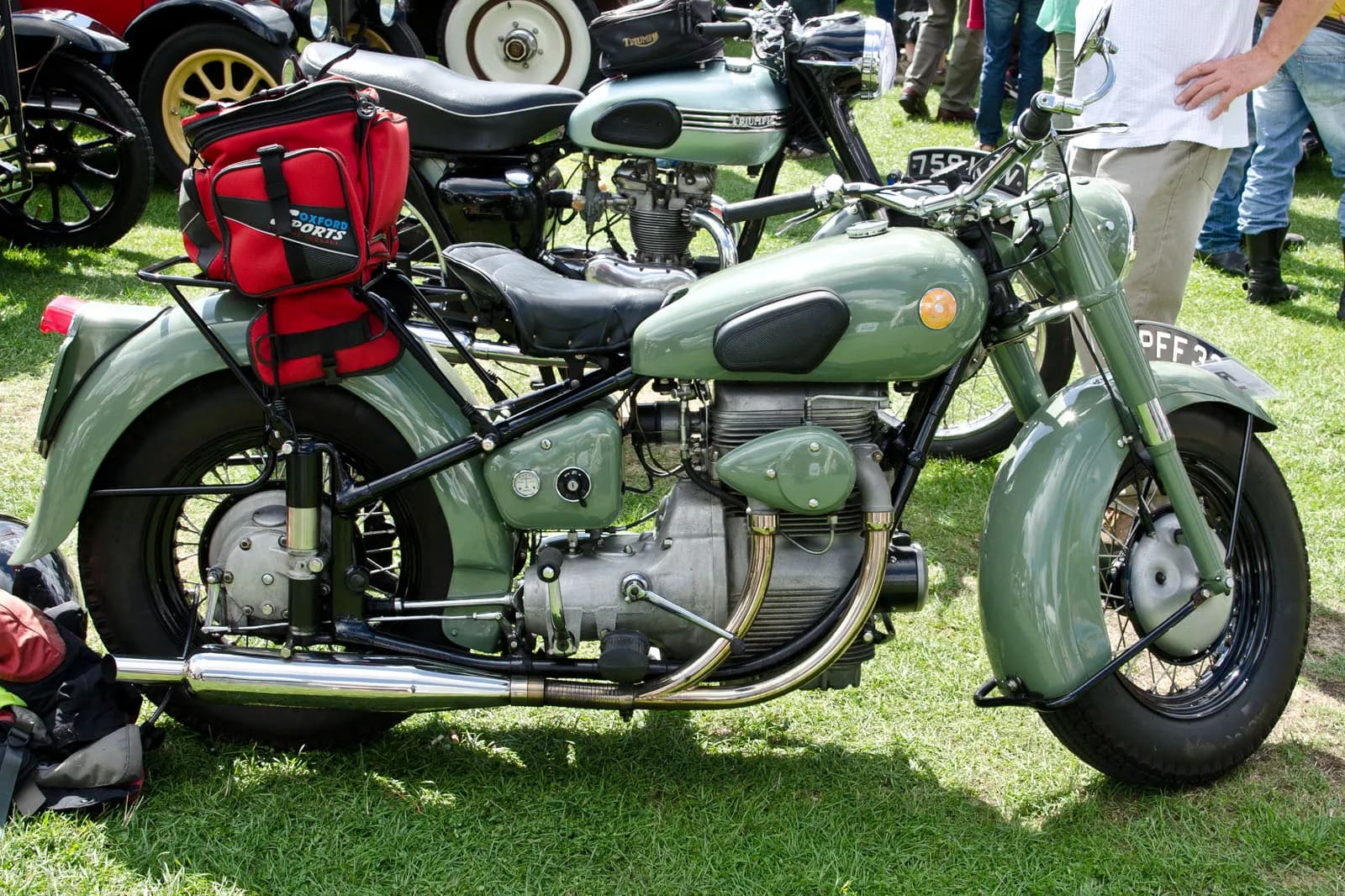
Sunbeam continued bicycle production until 1937, spanning fifty years. The company also manufactured motorcycles from 1912 to 1956, including the innovative S7 and S8 models that featured longitudinal inline twin engines with shaft drive.
Rudge-Whitworth: Engineering Innovation
The merger of Rudge Cycle Company of Wolverhampton with Whitworth Cycle Company of Birmingham in 1894 created one of Britain's most technically advanced bicycle manufacturers. Daniel Rudge and Charles Henry Pugh combined their expertise to produce machines that pushed the boundaries of cycling technology.
In 1907, John Pugh invented the detachable wire wheel, securing a patent the following year. The innovation proved revolutionary. Twenty-one of the thirty-five entrants in the 1908 Isle of Man TT race used Rudge-Whitworth wheels. By 1913, the design had become universal in grand prix racing. The technology eventually attracted the attention of Jaguar Cars, which acquired Rudge-Whitworth after the Second World War.
Between 1912 and 1923, Rudge-Whitworth developed a multigear transmission system using variable groove-depth pulleys. The mechanism provided twenty-one forward gear ratios, making it one of the earliest continuously variable transmissions available on motorcycles.
Viking: The City's Largest Manufacturer
Viking Cycles Limited began in 1908 as a bicycle repair shop founded by Alfred Victor Davies. His son Reg incorporated the company in 1939, transforming it into Wolverhampton's largest-ever bicycle manufacturer.
The company's growth was remarkable. By the mid-1960s, Viking employed approximately seventy people and produced more than twenty thousand bicycles annually. The Viking racing team dominated British competitions throughout the 1950s, cementing the brand's reputation for performance machines.
One of Viking's most successful innovations was a child's bicycle with telescopic rear stays and an adjustable seat tube. As children grew, parents could extend the frame rather than purchase a new machine. This design accounted for three-quarters of the company's business.
Despite this success, Viking Cycles closed its doors in 1967, becoming one of the last major volume manufacturers to leave Wolverhampton.
The Decline of an Empire
The collapse of Wolverhampton's bicycle industry occurred with startling speed. The 1960s and 1970s witnessed the departure of the last volume manufacturers. Viking's closure in 1967 marked the end of large-scale production. Smaller operations, including those run by Percy Stallard and Jack Hateley, survived into the 1980s before finally shutting down.
Several factors contributed to the decline. Competition from foreign manufacturers intensified throughout the 1960s. The popularity of club cycling waned, reducing domestic demand. Economic pressures mounted as production costs rose and profit margins tightened. Within two decades, a 107-year industrial powerhouse had vanished entirely.
What Remains Today
The physical heritage of Wolverhampton's bicycle empire has largely disappeared. The factories have been demolished or repurposed. The machinery has been scrapped. Of the more than two hundred manufacturers that once operated in the city, no trace remains in commercial production.
Some artifacts survive at the Black Country Living Museum in nearby Dudley. The museum maintains a collection of approximately forty motorcycles manufactured in the Black Country, including numerous Sunbeam and AJS machines. The Hardware and Ironmonger's Shop, relocated from Pipers Row in Wolverhampton, would have sold bicycles and components during the industry's heyday. The Motorcycle Shop display, based on A. Hartill and Sons of Mount Pleasant, Bilston, showcases six locally-made motorcycles from 1929 to 1934. An early fire engine manufactured at the John Marston Company Limited factory in Wolverhampton also forms part of the collection.
Blue plaques mark significant sites in the city. The Sunbeamland works earned recognition from the Wolverhampton Civic Society. The Viking Cycle Company showroom also carries a commemorative plaque.
The Human Legacy
Wolverhampton's cycling heritage extends beyond manufacturing to the sport itself. Percy Stallard, born in the city in 1909, became one of British cycling's most influential figures. He founded the British League of Racing Cyclists in 1942, successfully campaigning to reintroduce massed-start road racing to British roads. In 1986, he established the League of Veteran Racing Cyclists. Stallard died in 2001, but his contributions to British cycling continue to influence the sport.
John Marston himself remains a notable figure. Despite manufacturing some of the finest bicycles and motorcycles in Britain, he never learned to ride either. His perfectionism, however, ensured that machines bearing his Sunbeam name set the standard for quality engineering.
From 1868 to 1975, Wolverhampton quite literally wheeled the world. The oil-bath chain cases, detachable wire wheels, and racing machines produced in the city's factories shaped cycling technology and culture across Britain and beyond. The industry that employed thousands and produced millions of bicycles has gone, but its influence persists in every long-distance ride, every racing wheel, and every chain that runs silently in its case.