The Match That Sparked a Continental Competition
On the evening of 13 December 1954, 55,000 spectators packed into Molineux Stadium in Wolverhampton to witness a football match that would alter the course of European sporting history. Under the newly installed floodlights that had cost the club £10,000 just one year earlier, Wolverhampton Wanderers faced Budapest Honvéd in a friendly that inadvertently laid the foundations for what is now the UEFA Champions League.
The Mighty Magyars Come to Wolverhampton
Wolves arrived at the fixture as reigning English champions, having secured their first league title in the 1953–54 season under manager Stan Cullis. Their opponents, Budapest Honvéd, were the Hungarian champions of 1954 and boasted a squad containing the core of Hungary's legendary "Mighty Magyars" national team. The visitors' roster included Ferenc Puskás, Sándor Kocsis, József Bozsik, and Zoltán Czibor; players who had humiliated England 6–3 at Wembley in 1953 and 7–1 in Budapest in 1954.
The match was part of an ambitious series of floodlit friendlies that Wolves had been hosting since September 1953. These fixtures, broadcast live on BBC television, had already seen victories over international opposition including Spartak Moscow and Racing Club. The floodlighting infrastructure, one of the first of its kind in British football, transformed Molineux into a venue capable of attracting Europe's finest clubs to the West Midlands on weekday evenings.
A Dramatic Comeback on a Rainy Evening
The weather on that December evening was poor, with rain falling throughout the match. Honvéd seized the initiative early, with Sándor Kocsis opening the scoring after ten minutes from a Ferenc Puskás free-kick. Four minutes later, Ferenc Machos doubled the Hungarian lead, leaving Wolves facing a significant deficit at half-time.
The second half produced one of the most celebrated comebacks in Molineux history. Johnny Hancocks reduced the deficit in the 49th minute from the penalty spot after a foul by János Kovács. With fourteen minutes remaining, Roy Swinbourne headed home an equaliser from a Dennis Wilshaw assist. Two minutes later, Swinbourne struck again, completing a 3–2 victory that sent the Wolverhampton crowd into jubilation.
The "Champions of the World" Proclamation
In the aftermath of the victory, Stan Cullis made a declaration that would have far-reaching consequences. The Wolves manager announced that his side were, in effect, "Champions of the World". The claim was not without logic; Wolves had beaten the champions of Hungary, whose national team was widely regarded as the finest on the continent. Yet the assertion rankled with observers across the Channel.
Gabriel Hanot, editor of the French sports newspaper L'Équipe, responded directly to Cullis's boast. Hanot argued that Wolves could not claim such a title without facing the finest clubs from other nations, specifically naming Real Madrid and AC Milan. In an editorial published shortly after the match, Hanot wrote: "Before we declare that Wolverhampton are invincible, let them go to Moscow and Budapest. And there are other internationally renowned clubs: AC Madrid and Real Madrid to name but two. A club world championship, or at least a European one… should be launched."
Jacques de Ryswick, Hanot's colleague at L'Équipe, followed with a detailed proposal for a tournament format just days later.
From Editorial to Institution
The proposal gained traction rapidly. In March 1955, the concept was formally raised at the UEFA Congress. By April of that year, approval had been granted. The 1955–56 season saw the launch of the European Cup, a competition that would eventually be rebranded as the UEFA Champions League in 1992.
The irony of the competition's origins is not lost on football historians. Wolves themselves were not invited to participate in the inaugural tournament; that distinction went to Chelsea as English champions, though the London club ultimately withdrew following pressure from the Football League. Wolves would eventually compete in the European Cup during the 1959–60 season, reaching the quarter-finals.
Local Legacy in Wolverhampton
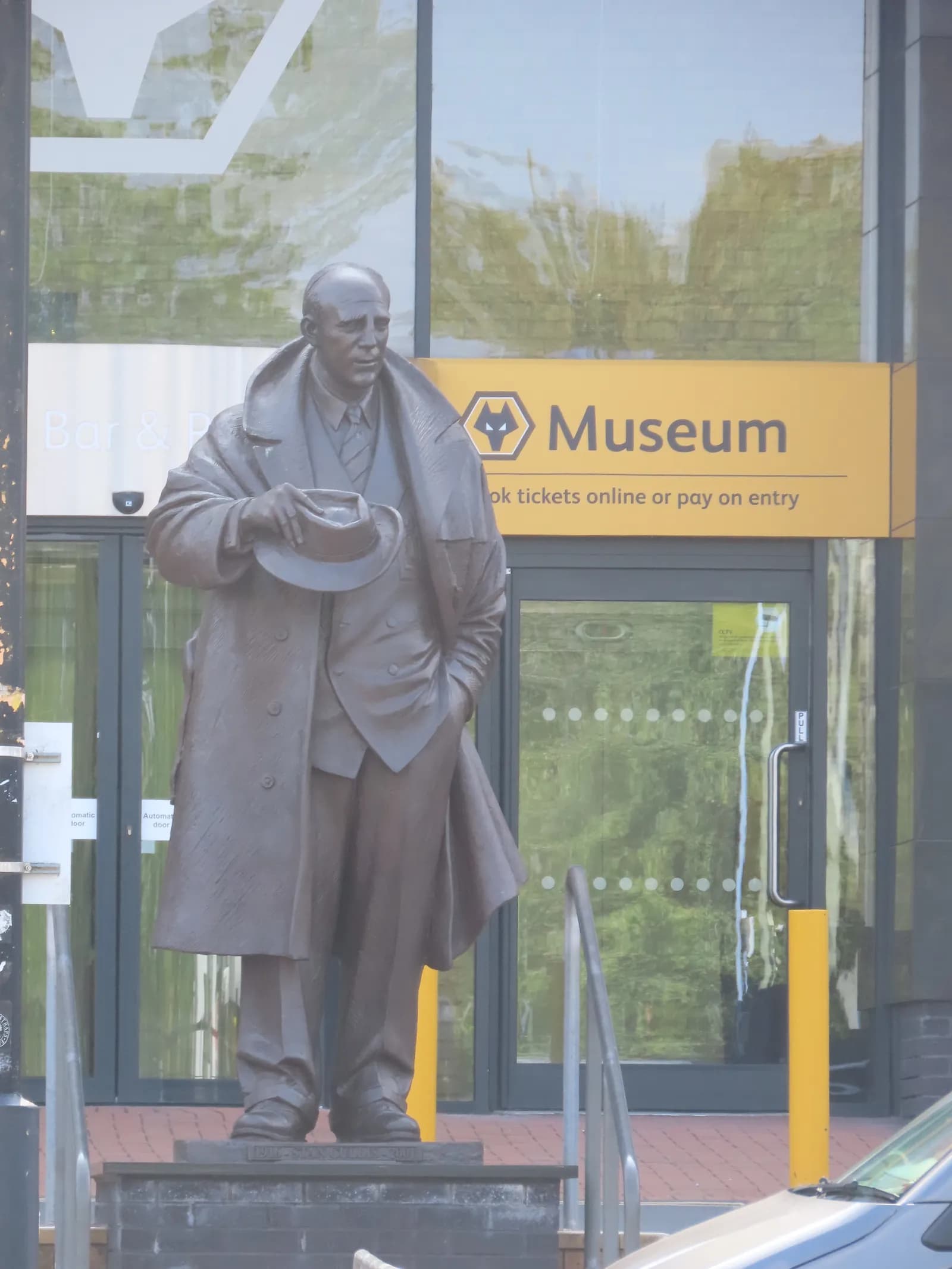
The 1954 match against Honvéd remains a cornerstone of Wolverhampton Wanderers' identity. Stan Cullis, who managed the club until 1964, is commemorated with a bronze statue outside Molineux, sculpted by James Butler and unveiled in 2003. The stadium itself, Wolves' home since 1889, continues to stand as a symbol of the city's contribution to European football.
For Wolverhampton, a Midland industrial town, to have hosted the match that directly inspired the world's premier club competition is a distinction that merits recognition. The £10,000 investment in floodlight technology, a considerable sum equivalent to approximately £274,000 in 2018 values, proved to be one of the most consequential sporting infrastructure decisions in British history.
The relationship between the two clubs endured beyond that December evening. Honvéd and Wolves met again in Budapest in 1963, and a commemorative match was held at Molineux in December 1993 to mark the anniversary of the original fixture.
What Is Confirmed
The match took place on 13 December 1954, with Wolves defeating Honvéd 3–2 at Molineux. Stan Cullis did declare his side "Champions of the World". Gabriel Hanot responded with his proposal for a European club competition, which was approved by UEFA in April 1955 and launched that autumn.
What Is Unclear
The precise wording of Cullis's post-match comments varies between sources. While the broad sentiment is well-documented, direct verbatim quotes should be treated with caution. The extent to which Hanot's editorial was directly triggered by the Wolves-Honvéd match versus being the culmination of longer-standing advocacy for a continental competition is a matter of historical interpretation.